
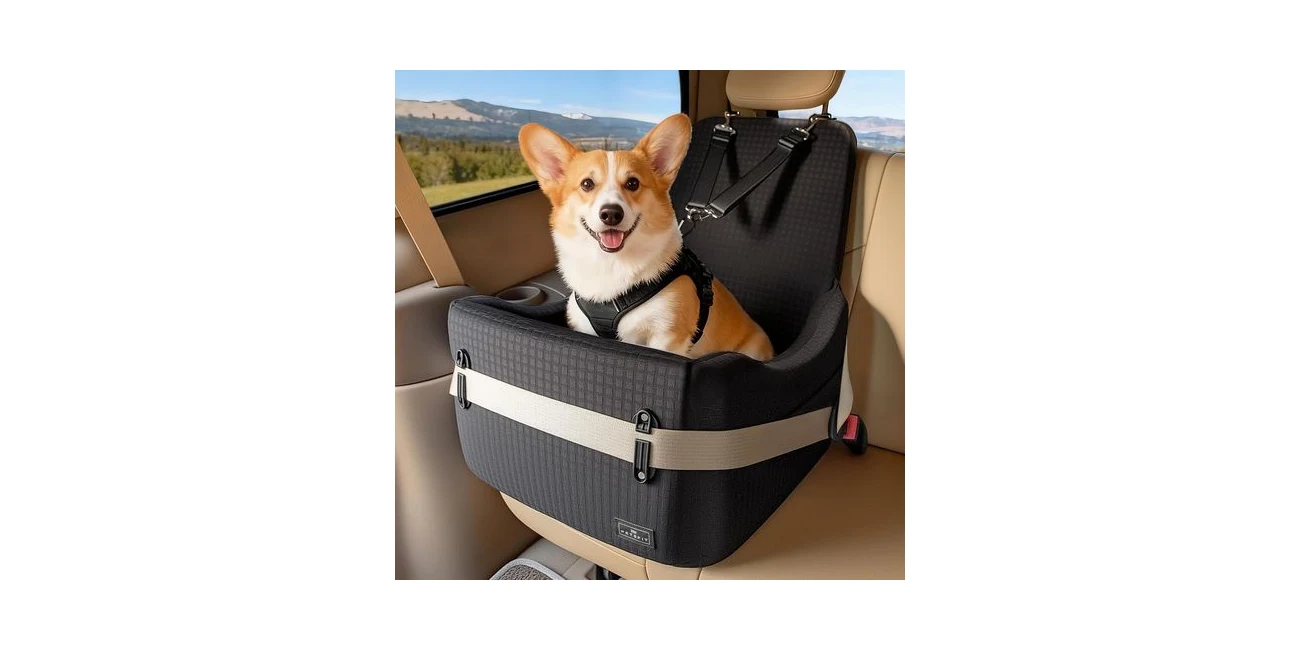
Best dog car seats for medium dogs (2026): 8 picks for 25 to 50 lb dogs
Key takeaways
- Medium dogs, roughly 25 to 50 lbs, sit in the hardest bracket to shop for. Most boosters stop at 25 or 35 lbs and most hammocks are built for giant breeds, so you are buying at the edge of two categories rather than the middle of one.
- The dividing line is about 35 lbs. Below it an elevated booster still works and gives the dog a raised view. Above it a booster bottoms out, and a hard-bottom extender that fills the footwell is the right product.
- Read the weight rating, not the word "medium." It means nothing to a manufacturer. A seat sold as "small to medium" is often rated to 25 lbs, which is fine for a Cocker Spaniel and unsafe for a 45 lb Aussie.
- Buy with margin. A dog at the exact top of a seat's rating compresses the padding flat and rides unstable on corners. Weigh your dog, then buy above that number.
- Our pick for 25 to 35 lbs is the PETSFIT booster at $58.97, the best-rated seat that genuinely holds 35 lbs. For 35 to 50 lbs it is the URPOWER hard-bottom extender at $38.99.
Medium dogs are the forgotten middle of this market. Listings cluster at the extremes: elevated boosters built around a 10 lb Chihuahua, and heavy platforms built for a 120 lb Rottweiler. A 40 lb Beagle mix or a 45 lb Australian Shepherd falls into the gap, too heavy to sit safely in most boosters and too small to need a cargo-area setup.
This guide is built around the 25 to 50 lb bracket specifically. The picks split into three groups that map onto how the decision actually works: boosters that genuinely hold 35 lbs, hard-bottom extenders for dogs past that, and hammocks for owners whose priority is protecting the car rather than positioning the dog.
How to size a seat for a medium dog
Read the rating, ignore the label
"Medium" means nothing to a manufacturer. A seat described as fitting small and medium dogs is frequently rated to 25 or 35 lbs, which is comfortable for a 30 lb Cocker Spaniel and genuinely unsafe under a 48 lb Aussie. Weigh your dog, then buy a seat rated at or above that with margin. A dog sitting at the exact top of a rating compresses the padding flat and rides unstable through corners, which is both a comfort problem and the reason cheap seats feel precarious to the dog.
Booster under 35 lbs, platform over 35 lbs
The practical dividing line sits in the high thirties. Below it an elevated booster still works and gives a medium dog the raised window view that keeps many dogs settled. Above it the booster starts to bottom out, and a hard-bottom back seat extender becomes the better product: it fills the footwell, spreads weight across a rigid base, and lets a 45 or 50 lb dog lie flat rather than perch. If your dog is right on the line, size up to the extender. The failure mode of a too-small booster is worse than the mild overkill of a platform.
Where a hammock fits instead
A hammock is not a smaller or larger version of the other two, it is a different goal. It slings between the front and rear headrests to cover the seat back and footwell, and its job is protecting your upholstery from a wet, muddy, shedding dog. It does not elevate and it does not restrain. Choose one when the car is what you are protecting, and pair it with a harness clipped to a seat belt anchor for the actual safety function.
Our 8 picks
Ranked from our catalog of 86 products, weighted for whether a stated capacity holds up under a real dog of this size. Prices and ratings are the values in our catalog at the time of writing and will drift.

PETSFIT Dog Booster Car Seat, up to 35 lbs
The best-rated seat we can find that genuinely holds a 35 lb dog rather than claiming to. That distinction is the whole problem in this size bracket: plenty of seats say small to medium and mean 25 lbs, and a 33 lb dog in one of those compresses the base flat within weeks and then rides on a sagging shell that shifts on every corner. The frame here is properly structured, the sides are tall enough to contain a dog that likes to reposition mid-journey, and the cover comes off to wash. The review count is modest at 211, so the 4.7 is encouraging rather than settled. It is also the most expensive booster here, and for a dog near 35 lbs it is the one worth paying for.
Check price on Amazon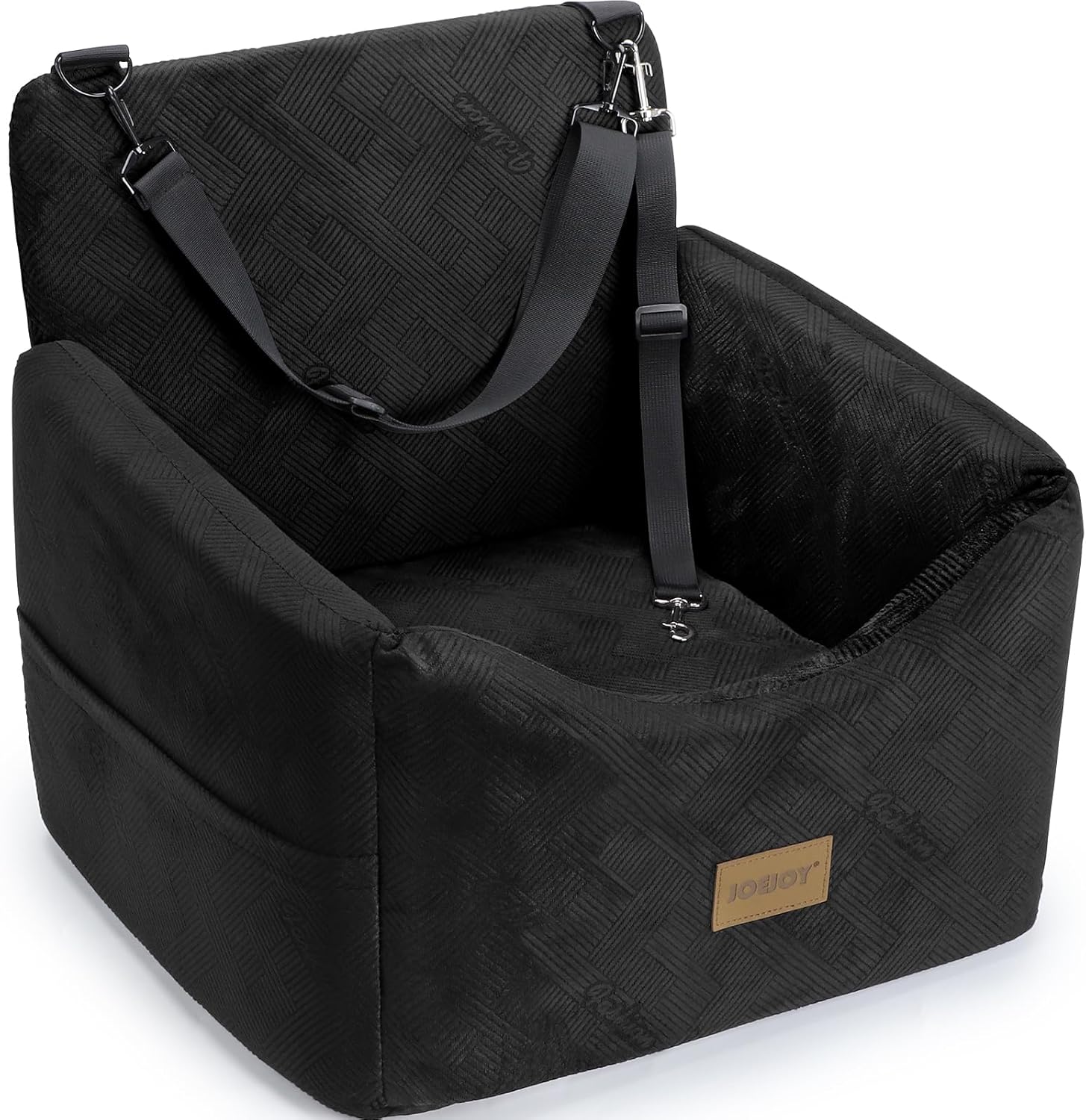
JOEJOY Dog Car Seat for Small and Medium Dogs Under 35 lbs
The same 35 lb capacity for around forty dollars, which makes it the sensible default if your dog sits in the 25 to 32 lb range rather than pressing the limit. The build is a step below the PETSFIT, with a slightly thinner base and a less rigid shell, but the belt routing is real rather than elastic straps and the internal anchor is usable. For a Beagle or a medium Goldendoodle that rides a few times a week, this is enough seat. If your dog is closer to 35 lbs, or rides daily, the extra spend on the PETSFIT buys durability you will actually use.
Check price on Amazon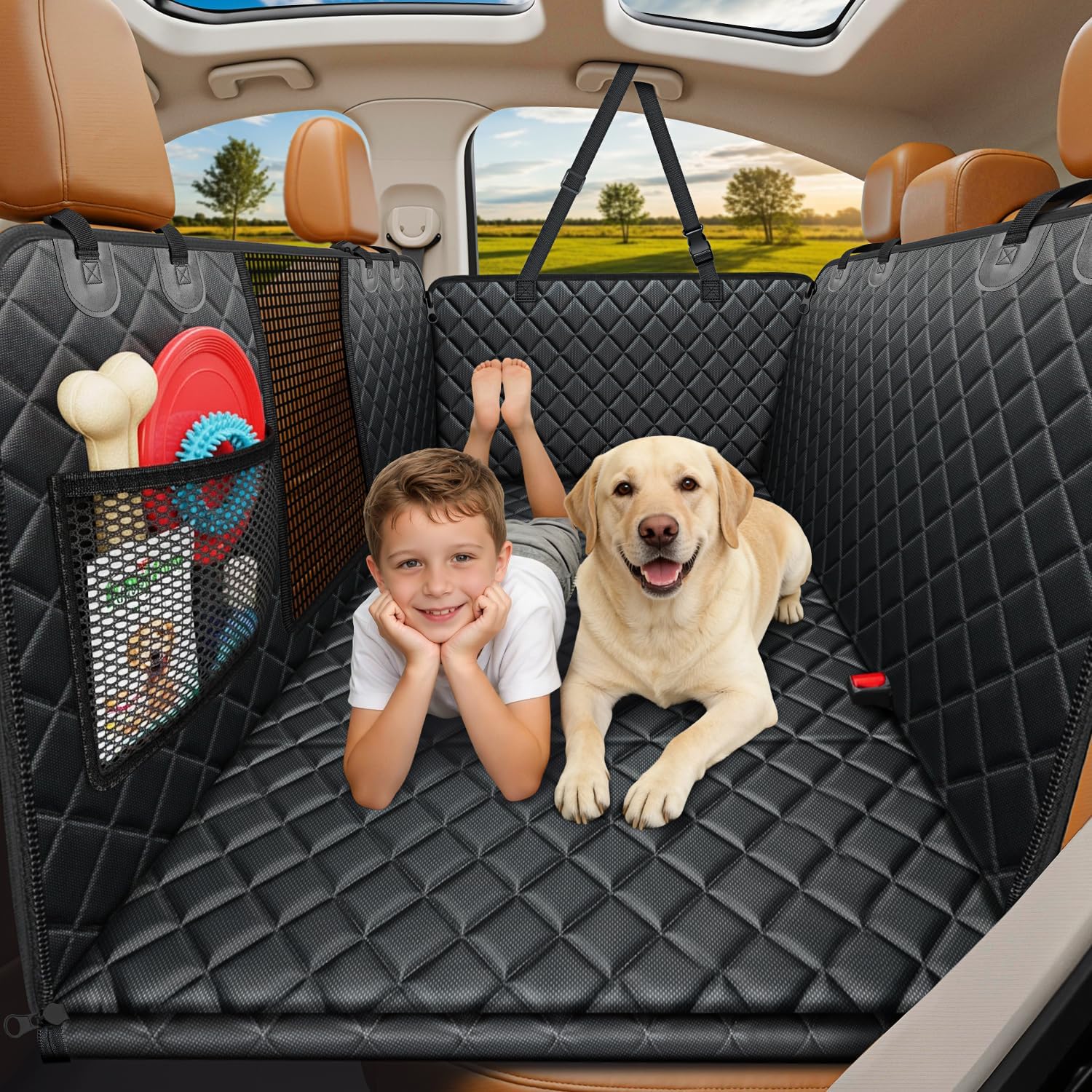
URPOWER Hard-Bottom Back Seat Extender
Once your dog is past about 35 lbs the booster category stops making sense, and this is what replaces it. It fills the rear footwell so the back seat becomes one flat load-bearing surface, which lets a 45 lb dog lie down properly instead of perching on something built for a dog half its size. The rigid base is the point: a fabric hammock at this weight sags into a trough and the dog spends the drive braced against the slope. Waterproof face, and it takes the abuse a medium dog with claws delivers. At 4.5 across more than two thousand reviews it is the most proven platform in this guide.
Check price on Amazon
PROZAR Hard-Bottom Back Seat Extender
The cheaper hard-bottom platform and a reasonable buy if the URPOWER is more than you want to spend. It performs the same core job of turning the seat and footwell into a single flat surface, with adequate waterproofing and a similar install. The differences show over time rather than on day one: thinner support panels and less reinforcement at the seams, which owners of dogs at the top of the range notice first. For a 35 to 42 lb dog, or for a car that only occasionally carries the dog, the saving is defensible.
Check price on Amazon
LEHNI Hard-Bottom Extender with Mesh Window
A hard-bottom platform with a mesh panel in the front face, which solves a real complaint about this product type. A full extender walls the dog off from the front of the cabin, and some dogs settle much worse when they cannot see their owner. The mesh restores the sightline and moves air at the same time, which matters for a thick-coated medium dog in summer. Everything else matches the category: rigid base, waterproof surface, footwell fill. Choose this over the URPOWER if your dog is anxious rather than simply large.
Check price on Amazon
URPOWER 100 Percent Waterproof Hammock Seat Cover
More than forty-five thousand reviews at 4.6, which is about as strong a consensus as this category produces. A hammock is the right choice when your priority is protecting the car rather than positioning the dog: it slings between the front and rear headrests, covers the seat back and the footwell, and stops a wet or muddy dog reaching the upholstery at all. Genuinely waterproof rather than merely resistant, which is the spec that decides whether it survives a rainy walk. It does not elevate and it does not restrain, so pair it with a harness clipped to a belt anchor.
Check price on Amazon
Kytely 600D Heavy-Duty Dog Hammock
The heavier fabric is the reason to pick this one. Medium dogs are the worst offenders for coat and claws relative to how much people plan for it, and a lightweight hammock develops pulls and thin patches within a season under a dog that circles before lying down. The 600D weave resists that meaningfully longer. It is a plainer product than the URPOWER, with less refined edge finishing, but it is the one still intact after a year with an Australian Shepherd on it. Good value at under thirty dollars.
Check price on Amazon
iBuddy Breathable Hammock with Mesh Window
The hammock equivalent of the LEHNI: a mesh window that keeps the dog in visual contact with the front of the car and lets air move through rather than trapping it behind a solid sheet. Worth choosing for a double-coated breed, or for anyone whose dog whines through a drive because a full hammock has boxed it in. The fabric is lighter than the Kytely, so it is the better pick for a dog that sheds heavily but is not hard on materials. At 4.6 across more than nine thousand reviews it is a well-established option rather than a gamble.
Check price on AmazonComparison at a glance
| Pick | Price | Rating | Best for | Spec |
|---|---|---|---|---|
| PETSFIT Booster (35 lb) | $58.97 | 4.7 (211) | best booster for dogs 25 to 35 lbs | Up to 35 lbs, structured frame |
| JOEJOY Booster (35 lb) | $39.96 | 4.6 (468) | best value booster | Under 35 lbs |
| URPOWER Hard-Bottom Extender | $38.99 | 4.5 (2,310) | best platform for dogs 35 to 50 lbs | Hard bottom, waterproof |
| PROZAR Hard-Bottom Extender | $29.03 | 4.5 (1,460) | best value platform | Hard bottom, back seat extender |
| LEHNI Extender (mesh window) | $32.39 | 4.5 (696) | best ventilated platform | Hard bottom, mesh window, waterproof |
| URPOWER Waterproof Hammock | $32.99 | 4.6 (45,192) | best waterproof hammock | 100 percent waterproof, hammock |
| Kytely 600D Heavy Duty | $27.99 | 4.6 (5,875) | best for heavy shedders and claws | 600D heavy duty, hammock |
| iBuddy Mesh Window Hammock | $29.99 | 4.6 (9,135) | best breathable hammock | Mesh window, breathable |
Quick answers by breed
Beagle
Beagles run 20 to 30 lbs, which puts them at the comfortable lower end of this bracket and inside booster territory without argument. The JOEJOY covers a typical Beagle well and the PETSFIT is the upgrade if yours is at the top of the range or rides daily. Two breed notes. Beagles are scenthounds with a strong pull toward whatever they can smell, so the harness matters as much as the seat for stopping a dog that suddenly decides to investigate the front of the car. And they are over-represented in motion sickness, so the raised view a booster provides is doing real work rather than just being pleasant.
Goldendoodle
Goldendoodles are the reason this page cannot give one answer. The breed is not standardised, and the three common sizes need three different products. A mini at 15 to 30 lbs belongs in a booster, and our small-dog guide may suit the lighter end better. A medium at 30 to 45 lbs is exactly what this page is built for: booster at the bottom of that range, hard-bottom extender above about 35. A standard at 50 to 90 lbs is a large dog, and the large-dog guide is the right page. Weigh your dog rather than going by the name. The coat is the other consideration: doodle coats hold water and shed unpredictably depending on the generation, so waterproofing is worth more here than on a smooth-coated dog of the same weight.
Australian Shepherd
Aussies span 40 to 65 lbs, which means a good number of them are past this bracket entirely. If yours is under 50, the hard-bottom extender is the right product and the URPOWER is our pick. If yours is over 50, use the large-dog guide instead. Two things matter for the breed specifically. The double coat sheds heavily and holds heat, so the mesh-window options are worth the small premium. And Aussies are working dogs that track movement obsessively, which means a solid-panel extender that blocks their view of you can make a restless dog more restless rather than less. The LEHNI or the iBuddy address that directly.
Shedding, mud and cleaning
Medium dogs generate more mess per car than either end of the size range, because they are big enough to carry real volumes of water and dirt but small enough that people put them on the seat rather than in the cargo area. Three things worth deciding up front.
- Waterproof means sealed, not resistant. Water resistant fabric beads briefly and then wicks through into the padding, and padding that has absorbed anything does not recover. If your dog swims, walks in rain, or is ever damp when it gets in the car, this is the spec to buy on.
- Heavier fabric lasts under claws. A medium dog circling before it lies down works claws into the surface every trip. A 600D weave survives that considerably longer than a lightweight one, which is most of the difference between a cover that lasts a season and one that lasts years.
- Removable beats wipeable. Anything that goes in a washing machine will actually get cleaned. Anything that has to be wiped in the car will get wiped twice and then tolerated.
For the mess that has already happened, see our guides to getting dog hair out of car seats and protecting car seats from dogs.
The harness is the safety device
None of the products on this page restrain a dog in a collision. The booster contains and elevates, the extender provides a stable surface, the hammock protects the car. The restraint is a correctly fitted harness clipped to a seat belt anchor or to a structural interior tether.
- Measure chest girth at the widest point just behind the front legs, and buy to that rather than to a breed-based size chart.
- Use a chest-plate design. Load should spread across the sternum and ribs. Never attach to a collar.
- Two-finger rule. Two flat fingers between harness and dog at chest and back. Tighter restricts breathing, looser slips under load.
- Keep the tether short. Enough slack to sit, lie down and turn, no more. A long tether lets a 45 lb dog build momentum before the strap stops it.
Frequently asked questions
What counts as a medium dog for a car seat?
Roughly 25 to 50 lbs. Below 25 you are in booster territory proper and our small-dog guide applies. Above 50 the products change again and the large-dog guide is the right page. The category boundaries matter more here than in either neighboring bracket, because medium dogs sit at the edge of what most products are designed for.
Can a 40 lb dog use a booster seat?
Generally no. Almost every booster in this catalog stops at 35 lbs, and the ones claiming more tend to be the same shell with a more optimistic label. At 40 lbs the base compresses flat, the seat shifts on corners, and the dog ends up perching rather than lying down. A hard-bottom back seat extender is the correct product from about 35 lbs upward.
What is the difference between a hammock and a hard-bottom extender?
A hammock is fabric suspended between the front and rear headrests. It protects the upholstery and stops a dog dropping into the footwell, but it flexes under weight, so a heavier dog sits in a shallow trough and braces against the slope. A hard-bottom extender has a rigid base that fills the footwell to make one flat load-bearing platform. For a dog over about 35 lbs the rigid version is meaningfully better; below that the difference is mostly about how much you care about your seats.
My dog is right on the 35 lb line. Which do I buy?
The extender. A booster running at its rated maximum is the specific failure case to avoid: it compresses, it becomes unstable, and it wears out fast. A platform is mild overkill for a 35 lb dog and works perfectly well. Sizing up costs you nothing but a little seat space.
Do I still need a harness?
Yes, and it is the part doing the actual safety work. Nothing on this page is a crash restraint. Use a chest-plate harness sized by chest girth, clipped to a seat belt anchor or a structural tether, never to a collar.
Will an extender fit my car?
Most fit standard sedans and SUVs, because they are adjustable across a range of bench widths. The awkward cases are cars with unusually deep footwells, very sculpted bench seats, or rear buckles that sit deep in the seat bight. Measure the width of your back bench and the depth from seat front to the back of the front seats before ordering.
How do I stop a medium dog sliding around on corners?
A short tether is the main answer, because most sliding is the dog repositioning rather than being thrown. Beyond that, a rigid base beats a slung one, and a non-slip underside matters more than the listing suggests. If the dog is genuinely being thrown on normal cornering, the seat is too large for it or is not anchored to the belt properly.
Is it safe for a medium dog to ride in the front seat?
No. A deploying passenger airbag can seriously injure or kill a dog of this size. The back seat is the correct position for every product here. See our guide to state restraint laws for the legal position where you live.
For the full ranked catalog see our booster seats, seat covers and extenders and hammocks pages. For the underlying safety evidence see are dog car seats safe, and for correct fitting see how to install a dog car seat.