
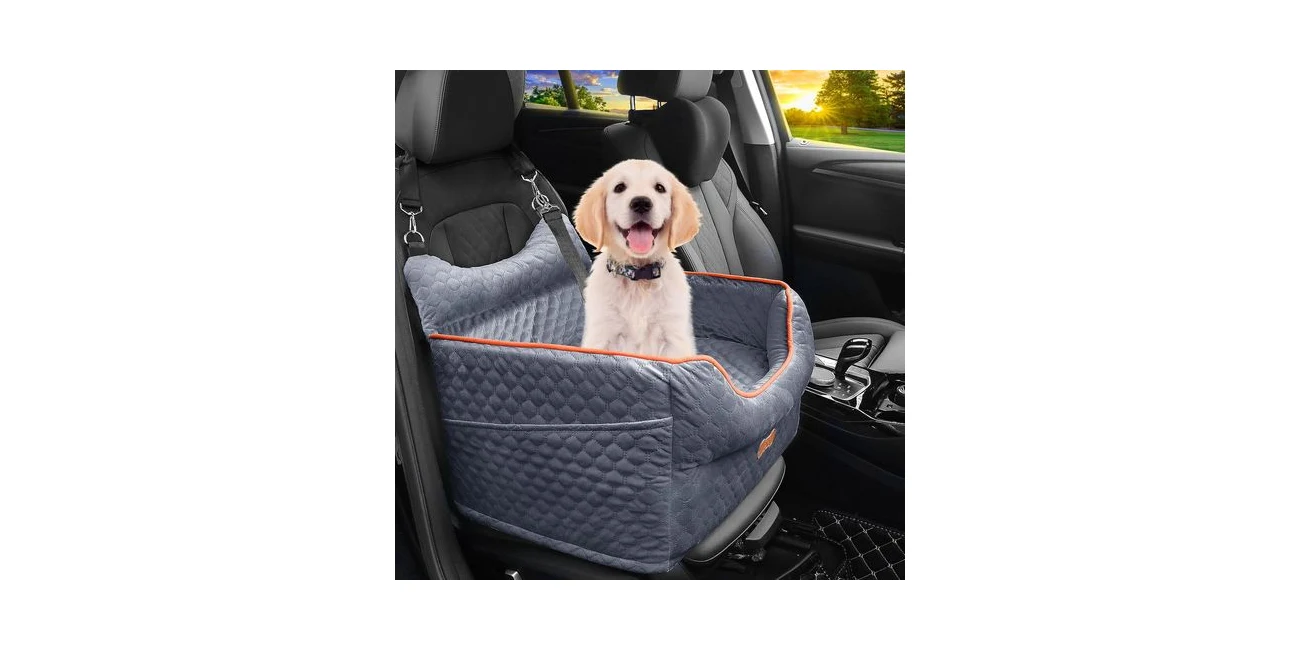
Best dog car seats for long-backed dogs (2026): Dachshunds and Corgis
Key takeaways
- Dachshunds carry the highest disc-disease risk of any breed. The DachsLife 2015 study put overall prevalence at 15.7 percent, rising to 24.4 percent in Standard Smooth-Haired Dachshunds. Corgis are chondrodystrophic for the same genetic reason and carry elevated risk too.
- Two specs decide the purchase: memory foam and lift height. Foam interrupts the road vibration that reaches the spine, and 5 to 7 inches of lift lets a long-backed dog stand instead of holding a flexed posture for the whole drive.
- Interior length is the spec people forget. A stretched-out standard Dachshund is 14 to 18 inches. A seat shorter than that forces the dog to curl, which is the posture you are trying to avoid.
- The jump out of the car is worse than anything that happens during the drive. Use a ramp or lift the dog. This single habit matters more than which seat you buy.
- Our overall pick is the Memory Foam Elevated Booster at $39.99, the only seat under forty dollars combining real memory foam with a 6-inch lift. For Corgis and larger standard Dachshunds, the melafa365 at $49.99 keeps memory foam at a 35 lb rating.
Most car seat advice tells you to match the weight rating to your dog. For a Dachshund or a Corgi that is close to irrelevant. These breeds carry a genetic spinal condition that makes the shape and firmness of the seat matter far more than what it says on the capacity label, and a seat that is perfectly adequate for a 25 lb Terrier can be a poor choice for a 25 lb Dachshund.
This guide covers the dwarf breeds people shop for most: Dachshunds and Corgis, both Pembroke and Cardigan. The same reasoning applies to Basset Hounds and other chondrodystrophic dogs. If your dog is long-backed and flat-faced, as French Bulldogs and Boston Terriers are, our guide for flat-faced breeds covers the airway side, which for those dogs is the more urgent constraint.
Why long-backed dogs need a different seat
The chondrodystrophic spine
Chondrodystrophy is the genetic trait that produces short legs and a long back. The same mutation changes the composition of the intervertebral discs, which calcify and lose their shock-absorbing properties years earlier than in a normally proportioned dog. Many Dachshunds show visible disc degeneration on radiographs by age three with no outward symptoms at all.
The consequence is that the disc is already compromised before anything goes wrong. What causes a herniation is not usually a single dramatic injury but the accumulation of ordinary loads on tissue that can no longer absorb them. Three motions do most of the damage:
- Jumping down. A dog landing from the height of a car seat concentrates the impact through the front legs and up into the spine. This is the single highest-load movement in a long-backed dog's normal day, and it happens twice per car trip.
- Twisting. Rotation under load is what turns a degenerated disc into a herniated one. A dog bracing against cornering in a seat that lets it slide is doing exactly this, repeatedly, for the length of the drive.
- Sustained flexion. A dog held in a crouch cannot redistribute load. Twenty minutes is tolerable. A daily commute over years is not, and this is the failure mode that a flat pad guarantees.
Why the car specifically
The car concentrates all three motions in one place. The dog jumps up to get in, holds a braced posture for the duration, absorbs vibration through a metal frame the whole time, then jumps down at the other end. For a breed with a one-in-four lifetime risk, the car is not a neutral environment, and treating the seat as part of the management is reasonable rather than excessive.
Which dog needs which seat
| Breed | Typical adult weight | What to buy | Why |
|---|---|---|---|
| Miniature Dachshund | 8 to 11 lbs | Memory-foam booster, 25 lb rating | Well inside every capacity here, so buy purely on foam quality and lift height. Interior length still matters more than weight. |
| Standard Dachshund | 16 to 32 lbs | Memory-foam booster, 35 lb rating | The upper half of this range exceeds most memory-foam seats, which stop at 25 lbs. Check the interior length is at least 17 inches. |
| Pembroke Welsh Corgi | 24 to 30 lbs | Memory-foam booster, 35 lb rating | Sits right at the top of the booster category. A seat rated to exactly 30 lbs will deform under a heavy male. |
| Cardigan Welsh Corgi | 25 to 38 lbs | 35 lb booster, or a hard-bottom extender | The heaviest of the group and often past booster capacity. A flat platform across the seat and footwell is frequently the better answer. |
| Basset Hound | 40 to 65 lbs | Hard-bottom seat extender | Far past every booster here. Same chondrodystrophic spine, but the product answer is a platform, not a bucket. |
What to look for
| Spec | What to look for | Why it matters |
|---|---|---|
| Cushion material | Memory foam, not polyfill | The most important spec. Memory foam absorbs road vibration; polyfill compresses flat and transmits it straight through. |
| Lift height | 5 to 7 inches | Lets the dog stand with a neutral spine. Below 4 inches forces sustained flexion for the whole drive. |
| Interior length | 17 inches or more for a standard Dachshund | The forgotten spec. A seat that makes the dog curl undoes the benefit of buying for the spine. |
| Cushion depth | 3 to 5 inches | Enough to absorb road feedback. Below 2 inches is a pad, not a cushion. |
| Side wall height | 6 to 8 inches | Contains the dog without requiring it to climb, which is itself a jump-down motion. |
| Base rigidity | Metal frame or hard bottom | A sagging fabric basket changes shape as the dog shifts, which encourages exactly the bracing and twisting you want to prevent. |
| Waterproof base | Sealed, not merely water resistant | Dogs on post-episode medication are often temporarily incontinent. Fluid in the foam ends the seat. |
Our 8 picks
Ranked from our catalog of 86 products, weighted for vibration absorption, lift and interior length rather than general popularity. Prices and ratings are the values in our catalog at the time of writing and will drift.

Memory Foam Elevated Booster
This is the only seat under forty dollars that pairs genuine memory foam with a 6-inch lift, and for a chondrodystrophic dog that combination is the whole decision. The foam interrupts the vibration path from road to frame to seat to spine, which polyfill does not, and the lift means the dog can stand and turn without holding a flexed posture for the whole drive. The 25 lb ceiling covers every mini Dachshund and most standards. If your dog is a larger standard or a Corgi, go to pick 2 rather than running this seat at its limit.
Check price on Amazon
melafa365 Memory Foam Booster
The rare seat that keeps real memory foam at a 35 lb rating, which is exactly the gap most long-backed owners fall into. Corgis run 24 to 31 lbs and larger standard Dachshunds reach 32, and most memory-foam boosters stop at 25. The 17-inch interior is the other reason it is here: a stretched-out Dachshund is 14 to 18 inches, and a seat that forces the dog to curl defeats the purpose of buying for the spine in the first place. Removable washable cover. For a dog with a diagnosed disc episode in its history, this is the sensible default.
Check price on Amazon
HEGGCOOE Memory Foam Booster
The thickest cushion in this lineup and the best-reviewed at its volume, with over two thousand reviews behind a 4.7 average. If your dog has already had a disc episode and you are treating the car as part of the medical management rather than as transport, the extra foam depth is worth the premium over the melafa365. The build quality difference is visible in the frame and the stitching rather than in the spec sheet. It is the most expensive seat here, and for a young dog with no history that is more seat than the situation calls for.
Check price on Amazon
Lesure Booster with Waterproof Bottom
The waterproof base is the differentiator, and it matters more for this group than it sounds. Dogs recovering from a disc episode are often on medication that affects continence, and a seat that wicks into the foam becomes unusable fast. The 4.6 average across more than two and a half thousand reviews reflects a build that holds its shape. The cushion is firm rather than memory foam, so for pure vibration absorption the melafa365 is better. For an incontinence-prone or post-surgical dog, this is the more practical seat.
Check price on Amazon
NEEZUKAR Detachable Washable Booster
Fully detachable and machine washable, which sounds like a convenience feature until you are dealing with a dog on crate rest that cannot always wait. The construction splits into cover and frame rather than the usual fixed-liner design, so it actually cleans rather than merely rinsing. Capacity under 30 lbs covers Corgis and standard Dachshunds. The cushion is mid-depth: better than a flat pad, short of the memory-foam picks. A reasonable middle option if the top picks are more than you want to spend.
Check price on Amazon
JOEJOY Deluxe Booster with Metal Frame
Most sub-thirty-dollar boosters are fabric baskets that sag under a dog and change shape as it moves, which is the opposite of what an unstable spine needs. This one has an actual metal frame, so the platform stays flat and the belt path stays where it was designed to be. The cushion is basic, so pair it with a folded towel or a foam insert if you drive any distance. For a young long-backed dog with no disc history, or for a second car, it is the honest budget answer.
Check price on Amazon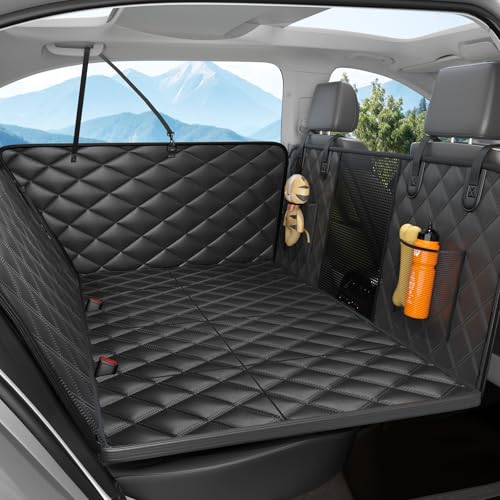
Hard-Bottom Back Seat Extender
A different approach to the same problem. Instead of lifting the dog into a bucket, this fills the rear footwell to make the entire back seat one flat rigid platform. For a Cardigan Corgi at the top of the range, or for two long-backed dogs traveling together, that is more usable space than any booster provides. The real benefit is that it removes the gap the dog would otherwise step down into, and a level surface end to end means fewer of the small twisting movements that load a compromised disc. Pair it with a harness clipped to a seat belt anchor, because a flat platform contains nothing on its own.
Check price on Amazon
Collapsible Soft-Sided Carrier
Worth owning specifically because of how this breed group tends to end up needing the vet. A dog in an acute disc episode should be moved as little and as rigidly as possible, and a structured carrier lets you lift the whole dog without it twisting in your arms. It also collapses flat for storage between uses. For routine trips a mini Dachshund is comfortable in it. Be clear on what it is: a carrier contains a dog, it does not restrain one in a crash, so it is for short vet runs rather than a substitute for a belted booster.
Check price on AmazonComparison at a glance
| Pick | Price | Rating | Best for | Spec |
|---|---|---|---|---|
| Memory Foam Elevated Booster | $39.99 | 4.6 (1,755) | best overall for long-backed dogs under 25 lbs | Memory foam, up to 25 lbs |
| melafa365 Memory Foam | $49.99 | 4.7 (1,375) | best for Corgis and standard Dachshunds | Memory foam, up to 35 lbs |
| HEGGCOOE Memory Foam | $55.98 | 4.7 (2,369) | best premium build for diagnosed IVDD | Thick memory foam, medium dogs |
| Lesure Waterproof Booster | $49.99 | 4.6 (2,539) | best waterproof build | Waterproof bottom, small dogs |
| NEEZUKAR Detachable | $39.99 | 4.6 (2,512) | best for easy cleaning | Detachable washable, under 30 lbs |
| JOEJOY Deluxe Metal Frame | $27.99 | 4.5 (2,004) | best budget seat with a real frame | Metal frame, small pets |
| Hard-Bottom Extender (400 lb) | $29.99 | 4.5 (157) | best for eliminating the jump down | Hard bottom, supports 400 lbs |
| Collapsible Soft Carrier | $19.99 | 4.6 (1,118) | best for vet trips and post-surgical transport | Collapsible, small dogs |
Quick answers by breed
Best car seat for a Dachshund
For a mini at 8 to 11 lbs, the Memory Foam Elevated Booster is the straightforward answer: real foam, 6-inch lift, well under capacity. For a standard, check your dog's weight and stretched length before ordering, because the 25 lb ceiling on most memory-foam seats excludes the upper half of the breed and a 16-inch interior makes an 18-inch dog curl. The melafa365 solves both with a 35 lb rating and a 17-inch interior. If your Dachshund has already had an episode, treat the seat as part of the management and buy the deepest foam you can, which is the HEGGCOOE. Whatever you buy, the ramp matters more.
Best car seat for a Corgi
Corgis at 24 to 31 lbs sit right at the top of the booster category, so a 35 lb rating is not overkill, it is the correct margin. The melafa365 is our pick for most Corgis: memory foam at a capacity that actually fits the breed. Cardigans run heavier than Pembrokes and often past useful booster capacity, in which case the hard-bottom extender is the better product because it gives a flat surface across the whole seat rather than a bucket the dog overflows. Corgis are also herding dogs wired to track movement, which is why elevation helps twice over, once for the spine and once for the motion sickness that comes from fixating on passing traffic.
The ramp is more important than the seat
If you take one thing from this guide, take this. A dog jumping down from a car seat to the pavement generates more spinal load in that half second than the entire drive that preceded it. For a breed with a one-in-four lifetime disc risk, eliminating that motion twice per trip is the highest-value change available, and it costs less than most of the seats above.
Two workable options. A folding car ramp with a non-slip surface, long enough that the incline stays gentle, which for a sedan means around five feet. Or simply lift the dog, supporting the chest and the hindquarters together so the back stays level and does not sag in the middle. The lift is free and works for dogs small enough to handle, which covers most of this group.
Whichever you choose, be consistent. A dog allowed to jump down sometimes will try to jump down every time, and the attempt itself is the risk.
Harness fit for a long back
The seat contains the dog. The harness restrains it. For long-backed breeds the fit has one requirement beyond the usual.
- Use a chest-plate harness, never a neck-loop design. Load needs to spread across the sternum and ribs. A harness that pulls at the neck on a long-backed dog levers the spine.
- Keep the tether short. A long tether lets the dog build momentum before the strap stops it, and a sudden stop against a compromised spine is the specific thing you are preventing. Short enough that the dog cannot leave the seat.
- Two-finger rule. Two flat fingers between harness and dog at chest and back. Tighter restricts breathing, looser slips under load.
- Check the fit against the body, not the label. Dachshund proportions defeat most size charts, which assume a roughly square dog. Measure the chest girth and buy to that.
Crate rest and post-surgical transport
Many owners in this breed group end up transporting a dog under strict activity restriction, either during conservative management of an episode or after surgery. The rules change in that period.
- Rigid beats padded. During acute management the goal is to prevent movement, not cushion it. A structured carrier that supports the whole dog is better than an open booster it can shift around in.
- Lift as one unit. Support chest and hindquarters together so the spine stays level. Never lift a long-backed dog under the front legs alone.
- Expect continence issues. Post-operative medication and nerve involvement both affect bladder control. A sealed waterproof base is the difference between a washable seat and a discarded one.
- Follow the discharge instructions over anything here. Your surgeon's restriction period is specific to your dog and supersedes general advice.
Frequently asked questions
What is IVDD and how likely is my dog to get it?
Intervertebral disc disease is the premature degeneration and herniation of the discs between the vertebrae. In chondrodystrophic breeds the discs calcify early and lose their shock-absorbing function. The DachsLife 2015 study reported 15.7 percent overall prevalence in Dachshunds, rising to 24.4 percent in Standard Smooth-Haired Dachshunds. Corgis are affected for the same genetic reason at a lower rate.
Does a car seat actually reduce IVDD risk?
No single product prevents a genetic condition, and any seller claiming otherwise is overselling. What a well-chosen seat does is remove specific repeated loads: sustained crouching, bracing against cornering, and vibration transmitted through a thin pad. Combined with eliminating the jump in and out, that reduces the cumulative load on discs that are already compromised. It is risk reduction, not prevention.
Memory foam or a firm cushion?
Memory foam, if the choice is between the two. Firmness alone does not absorb vibration; it transmits it. Memory foam deforms under load and returns slowly, which is what damps the high-frequency road feedback that reaches the spine. The exception is an acute episode, where restricting movement matters more than cushioning and a rigid carrier is the better tool.
How high should the booster be?
Five to seven inches for a dog under 30 lbs. That is enough to let the dog stand and turn without crouching, and enough to see the horizon, which reduces motion sickness. Below four inches the dog holds a flexed posture for the whole drive, which is the thing you are buying a seat to avoid.
Can two Dachshunds share one seat?
Not a booster, no. Two dogs in one bucket brace against each other and twist under cornering, which is the worst combination for these spines. Either two separate boosters belted in side by side, or a hard-bottom extender that gives each dog its own flat space with a separate harness tether.
Is a hammock cover suitable for a Corgi?
As a secondary layer, yes. A hammock stops the dog dropping into the footwell and protects upholstery, but it is fabric suspended between anchor points, so it flexes under a dog that shifts its weight, and it does not elevate. For the spine, a rigid platform or a foam booster is better. A hard-bottom extender gives you the footwell coverage of a hammock with a surface that does not move.
My dog is fine now. Is this overkill?
Disc degeneration is usually well advanced before any symptom appears, so a symptom-free dog is not necessarily an unaffected one. That said, for a young dog with no history, a solid booster with a metal frame and a ramp habit covers the realistic risk without the premium foam. The expensive seats earn their price for dogs that are older, heavier, or already diagnosed.
What should I do if my dog suddenly cannot walk after a car trip?
Treat it as an emergency and go to a veterinarian the same day. Acute onset hind-limb weakness or paralysis in a chondrodystrophic breed is a suspected disc herniation, and the outcome depends heavily on how quickly it is assessed, particularly whether deep pain sensation is still present. Keep the dog confined and level while transporting. Do not wait to see if it improves overnight.
For the full ranked catalog see our booster seats, seat covers and extenders and carriers pages. For the underlying safety evidence see are dog car seats safe, and for the small number of brands that publish independent test results see our crash-tested guide.