
Best dog car seats for flat-faced dogs (2026): Pugs, Frenchies, Bulldogs and Boston Terriers
Key takeaways
- Ventilation matters more than padding for these breeds. A dog that cannot pant efficiently cannot shed heat, and a high-walled padded booster traps warm air against the dog. Low sidewalls or mesh panels are the single most important spec.
- Weight, not breed, picks the product. Pugs, Boston Terriers and French Bulldogs at 12 to 28 lbs belong in a booster. English Bulldogs at 40 to 55 lbs are past every booster capacity here and need a hard-bottom seat extender instead.
- Frenchies and Boston Terriers are also chondrodystrophic, meaning long backs on short legs, so disc disease is common. Booster height and cushion firmness decide how much road vibration reaches the spine.
- Elevation reduces motion sickness. These breeds cannot see the horizon from a footwell, and nausea gets worse when the eyes and inner ear disagree. A 6-inch lift fixes it for most dogs under 30 lbs.
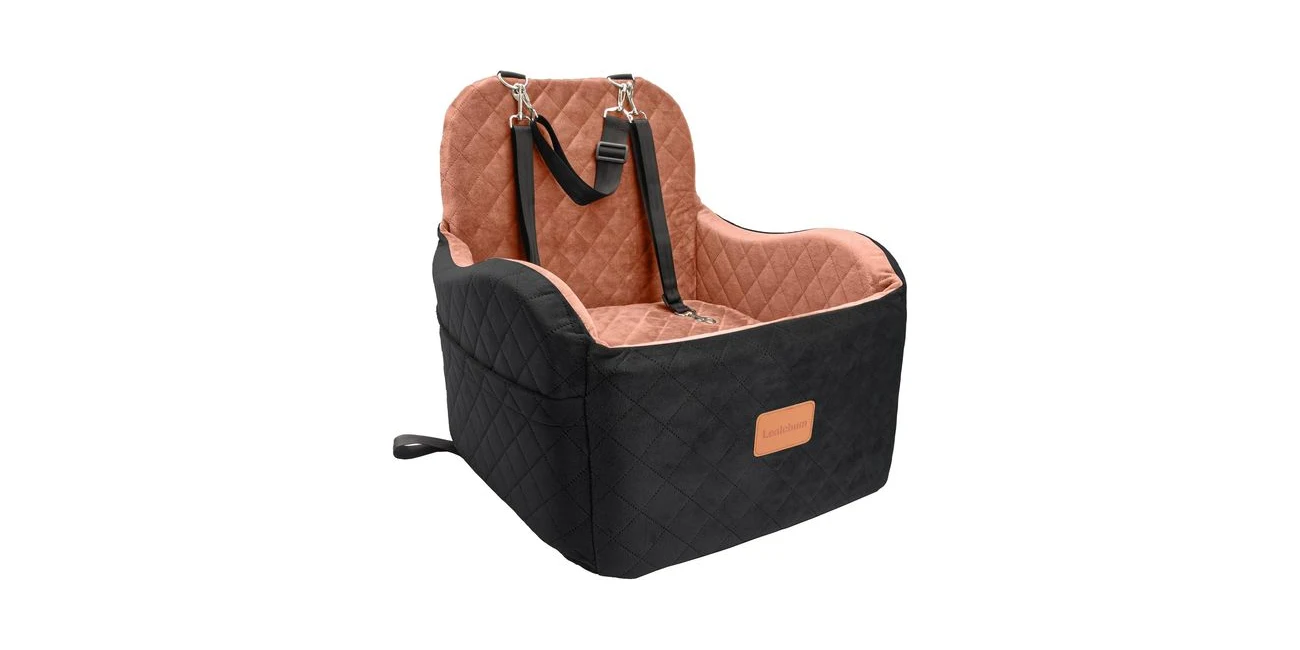
- Our overall pick is the Lealchum 6-inch elevated booster at $76.88, which is the only seat here that gets airflow and spine support right at the same time. The cheapest breathable option is the BYGD basket at $15.03.
Search for a car seat for a Pug and you will be told to buy one rated for your dog's weight. That is half the answer, and for a flat-faced dog it is the less important half. These breeds share an anatomy that changes which seat is appropriate, and the weight rating on the box says nothing about it.
This guide covers the four flat-faced breeds people most often shop for: Pugs, French Bulldogs, Boston Terriers and English Bulldogs. They are grouped together here because they share one dominant constraint, and separated by weight where the product answer genuinely differs.
Why flat-faced breeds need a different conversation
Most dog car seats are designed around a generic small dog of 10 to 25 lbs. That envelope fits three of these four breeds on paper. Two anatomical traits sit outside the design assumptions, and both change what you should buy.
The airway
Brachycephalic means a foreshortened skull. The soft tissue inside the head does not shrink to match the shortened bone, so it gets compressed: a thickened soft palate, narrowed nostrils, and often a smaller than normal trachea. Together these are called Brachycephalic Obstructive Airway Syndrome, or BOAS. Most Pugs, Frenchies and English Bulldogs have at least a mild form, and a substantial minority have moderate to severe disease that warrants surgery.
For a car seat, the consequence is specific and physical. Dogs cool themselves almost entirely by panting, which works by moving air fast across wet tissue. A dog with a restricted airway moves less air per breath, so it sheds heat more slowly than a normal-nosed dog of the same size. Put that dog in a padded bucket with high walls and you have built a container that holds warm air against an animal that cannot vent it.
Three practical consequences follow:
- Heat builds faster than you expect. The dog is generating heat and cannot dump it. Enclosure makes this worse in a way it does not for a Labrador.
- Stress compounds it. An anxious dog pants harder. Harder panting in a stuffy seat is a feedback loop, and in the worst cases it ends in collapse.
- Chest compression is dangerous. A harness that rides tight across the sternum restricts the diaphragm. The crash-safety benefit of a harness is real and you should still use one, but fit matters more here than for most breeds.
The spine
French Bulldogs and Boston Terriers are chondrodystrophic, a long-backed and short-legged body type they share with Dachshunds and Corgis. The relevant consequence is an elevated rate of intervertebral disc disease. Their discs degenerate earlier than a non-chondrodystrophic dog's, which makes sustained vibration, repeated jumping in and out of the car, and awkward held postures all matter more than they would otherwise.
This narrows to two specs. Booster height determines whether the dog can stand and turn with a neutral spine or has to crouch for the entire drive. Cushion firmness determines how much highway vibration reaches the discs. A 2-inch flat pad fails both tests. If your dog is over six or has an existing diagnosis, memory foam is the upgrade that matters most.
English Bulldogs are built differently again. They are not long-backed, but they are heavy, low-slung and genuinely poor jumpers, and hip dysplasia is common in the breed. The problem to solve for them is not vibration but the gap between the back seat and the footwell, and having a stable flat surface they do not have to climb onto.
Which breed needs which product
This is the table that decides your purchase. Find your dog's adult weight, then buy from that row.
| Breed | Typical adult weight | Product category | Why |
|---|---|---|---|
| Pug | 14 to 18 lbs | Booster, or carrier for short trips | Comfortably inside every booster capacity here. Prioritize airflow over everything: the Pug has the least efficient airway per pound of the four. |
| Boston Terrier | 12 to 25 lbs | Booster | Wide range within the breed. Long-backed, so cushion depth matters as much as ventilation. Weigh your dog rather than assuming. |
| French Bulldog | 16 to 28 lbs | Booster rated to 30 lbs or more | Heaviest of the booster-eligible three. Buy capacity headroom: a seat rated at exactly 25 lbs will deform under a show-line male. |
| English Bulldog | 40 to 55 lbs | Hard-bottom seat extender | Past every booster capacity in this category. Needs a flat rigid platform across the seat and footwell, not a bucket. |
If your dog sits between categories, buy up. A seat operating at its stated limit deforms, and a deformed frame does not hold the belt path it was designed around.
What to look for
| Spec | What to look for | Why it matters here |
|---|---|---|
| Ventilation | Mesh panels, open sides, or walls below shoulder height | The single most important spec. A dog that cannot pant efficiently cannot cool itself inside an enclosed bucket. |
| Weight rating | At least 20 percent above your dog's actual weight | Headroom protects against frame deformation and covers weight gain, which these breeds are prone to. |
| Cushion depth | 4 to 6 inches, memory foam if the dog is over six | Absorbs highway vibration before it reaches a chondrodystrophic spine. |
| Height | 6 inches of lift for dogs under 30 lbs | Lets the dog see the horizon, which reduces motion sickness, and stand with a neutral spine. |
| Interior tether | Metal D-ring riveted to the frame | The tether is your failover if the harness fails. Plastic clips on fabric straps break under load. |
| Belt routing | An engineered channel or webbing loops | Wrap-around designs slide under cornering. The belt path is what keeps the seat anchored. |
| Washable cover | Removable and machine washable | These breeds drool and shed heavily. A fixed cover becomes a permanent smell within a month. |
Our 8 picks
Ranked from our catalog of 86 products, weighted for the airway and spine constraints described above rather than for general popularity. Prices and ratings are the values in our catalog at the time of writing and will drift.

Lealchum 6-inch Elevated Booster
This is our overall pick for Pugs, Frenchies and Boston Terriers because it gets the two breed-critical details right at the same time. The side panels are low enough that warm air clears the dog instead of pooling around a face that cannot pant efficiently, and the 6-inch lift lets a short-legged dog stand and turn with the spine neutral rather than crouching for the whole drive. The cushion is firm enough to damp highway vibration without being a plank. The trade-off is price: at the top of the booster category, it is the most expensive seat here. If your dog runs hot, gets anxious, or you drive highway distances regularly, it is the one to buy.
Check price on Amazon
Petbobi Reinforced Breathable Booster
The mesh side panels here are larger than almost anything else in the category, which is the single spec that matters most for a brachycephalic dog in a warm car. The cushion is correspondingly thinner, and that is a deliberate trade: in a hot climate, airflow beats padding. The 4.2-star average is the lowest in this lineup and reflects two honest complaints, that the cushion compresses faster than memory foam and the frame is stiffer than padded rivals. For an air-conditioned car in a mild climate this is the wrong seat. For a Pug owner in Phoenix or Houston it is the right one, and at under twenty dollars you can replace it annually without much thought.
Check price on Amazon
PETICON Waterproof Memory Foam Booster
If your dog is over six, or already has an IVDD diagnosis, the memory-foam cushion is the upgrade that matters more than any other spec. Six inches of high-density foam absorbs the road vibration that ordinary polyfill transmits straight into a compressed spine. The fully waterproof liner under a washable cover handles the drool and shedding these breeds are known for, which is not a minor consideration in a sealed cabin. The 26 lb capacity covers Pugs, Boston Terriers and average Frenchies comfortably, but weigh a heavy show-line male first, because some Frenchies hit 28 lbs and you want headroom rather than a seat at its limit.
Check price on Amazon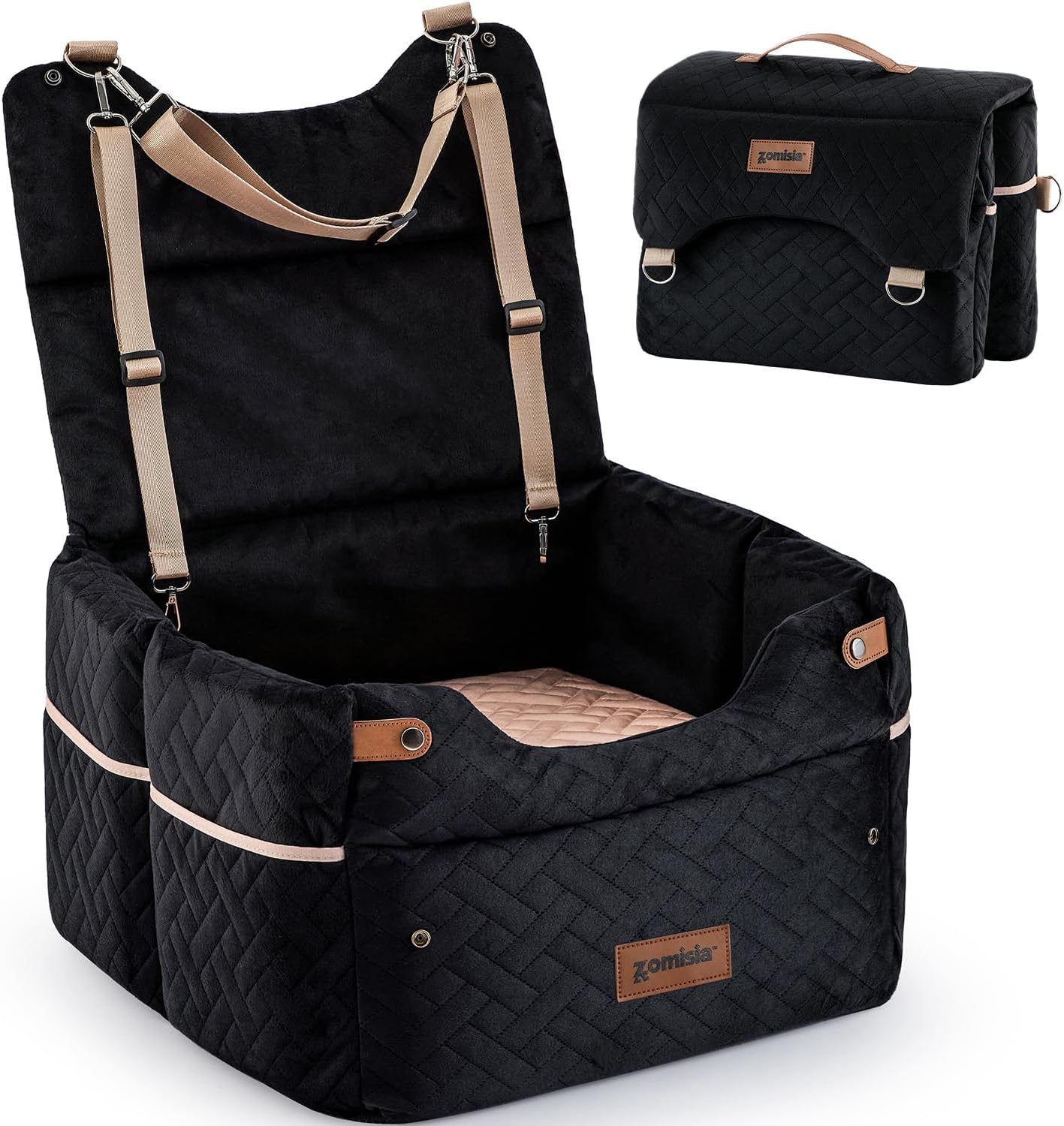
ZOMISIA Elevated Booster, 3 Adjustable Heights
The adjustable height is genuinely useful for this group rather than a gimmick, because flat-faced breeds span a wide size range and the correct lift depends on your car as much as your dog. Set it high in a sedan so the dog can see the horizon, which measurably reduces motion sickness, and drop it in an SUV where the seat is already tall and too much lift puts the head near the roof. The twin egg-crate foam pads breathe better than solid foam, a real advantage for a dog that offloads heat poorly. The review count is still low, so treat the rating as provisional rather than settled.
Check price on Amazon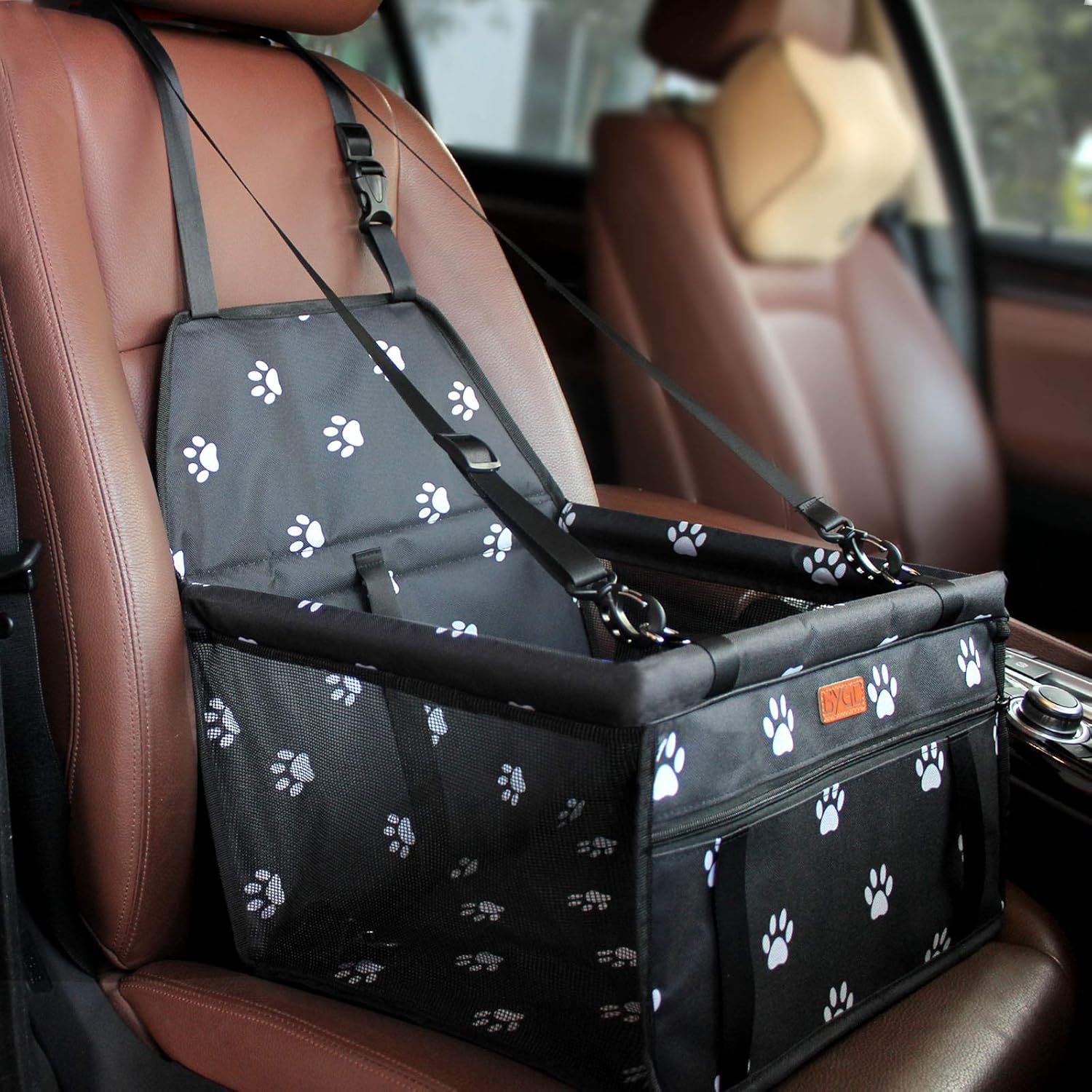
BYGD Breathable Basket Booster
The budget option that happens to suit a brachycephalic breed better than most premium seats. The open Oxford-mesh basket moves air around the dog rather than trapping it, and the upgraded internal support rod stops the basket collapsing under a twenty-pound dog. It folds flat between trips. The 4.0 average reflects a basic build rather than premium cushioning, so this is a short-warm-trip seat rather than a highway seat. For an occasional driver who wants ventilation without spending much, it is hard to argue with at around fifteen dollars.
Check price on Amazon
PETICON Hard-Bottom Back Seat Extender
English Bulldogs break the booster category. At 40 to 55 lbs they are far past every booster capacity here, and the right answer is a different product entirely. This extender fills the rear footwell to create one flat, rigid platform across the whole back seat, which solves the specific problem a heavy low-slung bulldog has: no gap to slip into, no jumping up or down, and a level surface that does not fold under the weight. The 400 lb rated hard bottom is genuine structural support rather than a padded cover. The mesh window keeps air moving, which still matters for this airway even though the dog is bigger.
Check price on Amazon
ELLINI Hard-Bottom Back Seat Extender
The cheaper hard-bottom platform, and the one to buy if the PETICON is more capacity than your dog needs. It does the same core job of turning the back seat and footwell into a single flat surface, with a waterproof face that survives bulldog drool and muddy feet. The build is a step down: the support panels are thinner and the seams are less reinforced, which shows up in reviews from owners of very heavy dogs. For a bulldog at the lower end of the range, or for a second car you use less often, the saving is reasonable.
Check price on Amazon
Top tasta Soft-Sided Carrier
Not every drive needs a booster. For a vet visit, a groomer run, or any in-cabin trip under about fifteen minutes, a soft carrier loads faster and gives the dog a den-like enclosure that lowers stress, which matters because stress panting is the start of the heat spiral in these breeds. The scratch-resistant shell over a one-piece steel frame holds its shape, and the mesh panels keep air moving. The 15 lb ceiling means this is a Pug, a small Boston Terrier, or a puppy. A typical adult Frenchie needs a soft crate instead. To be clear about what this is: a carrier contains a dog, it does not restrain one in a crash.
Check price on AmazonComparison at a glance
| Pick | Price | Rating | Best for | Capacity |
|---|---|---|---|---|
| Lealchum 6-inch Elevated | $76.88 | 4.8 (2,266) | best overall for flat-faced dogs under 35 lbs | S/M dogs up to 35 lbs |
| Petbobi Reinforced Breathable | $18.99 | 4.2 (10,405) | best airflow for hot climates | Small to medium dogs |
| PETICON Memory Foam | $39.99 | 4.6 (144) | best for seniors and IVDD-prone dogs | Memory foam, up to 26 lbs |
| ZOMISIA 3-Height Elevated | $39.99 | 4.6 (71) | best adjustable height | Medium dogs, egg-crate foam |
| BYGD Breathable Basket | $15.03 | 4 (3,568) | best budget breathable pick | Small/medium, mesh sides |
| PETICON Hard-Bottom Extender | $44.99 | 4.4 (199) | best for English Bulldogs and other heavy flat-faced dogs | Hard bottom, supports 400 lbs |
| ELLINI Hard-Bottom Extender | $29.99 | 4.4 (758) | best value hard-bottom platform | Hard bottom, waterproof |
| Top tasta Soft-Sided Carrier | $20.99 | 4.6 (1,420) | best for vet visits and short trips | Up to 15 lbs |
Quick answers by breed
Best car seat for a Pug
A Pug at 14 to 18 lbs fits every booster here, so choose on ventilation. The Petbobi is the most breathable seat in the lineup and the obvious pick for a warm climate. If you want more cushion and can spend more, the Lealchum is better built and still vents adequately. For vet runs and trips under fifteen minutes, the Top tasta carrier is faster to load and its 15 lb ceiling covers most Pugs. Watch weight gain closely: Pugs are prone to it, and an overweight Pug has a materially worse airway.
Best car seat for a French Bulldog
Frenchies are the heaviest of the booster-eligible breeds at 16 to 28 lbs, so buy capacity headroom. The Lealchum is our overall pick because the 6-inch lift suits a long-backed dog and the low sides vent well. For an older Frenchie or one with an IVDD diagnosis, the PETICON memory foam booster is the better buy despite the lower review count, because vibration damping is the thing that matters most for that dog. Weigh a show-line male before ordering, as some reach 28 lbs and a 26 lb rated seat leaves no margin.
Best car seat for a Boston Terrier
Boston Terriers vary more than the other three, from around 12 lbs to 25 lbs, so weigh your dog rather than buying to the breed average. They are long-backed like Frenchies, so cushion depth matters alongside airflow. The ZOMISIA adjustable booster suits them well because you can tune the lift to the dog and the car. Their airway is generally less compromised than a Pug's or an English Bulldog's, which gives you slightly more freedom to prioritize padding over maximum ventilation.
Best car seat for an English Bulldog
Do not buy a booster. At 40 to 55 lbs an English Bulldog exceeds every booster capacity in this guide, and forcing the issue with an oversized one gives you an unstable seat holding a heavy dog. The correct product is a hard-bottom seat extender that turns the back seat and footwell into one flat rigid platform. The PETICON is the stronger build and our pick for the breed. Bulldogs are poor jumpers with a high rate of hip dysplasia, so eliminating the climb up and the gap to fall into solves more than restraint alone would. A ramp for getting into the car at all is a reasonable companion purchase.
Fitting the harness, which is the part that does the safety work
The booster contains the dog. The harness restrains it. For flat-faced breeds the fit deserves closer attention than usual, because a barrel chest and a thick neck sit awkwardly against off-the-shelf sizing.
- Measure chest girth at the widest point, just behind the front legs. For an adult Frenchie this is usually 22 to 26 inches.
- Measure the neck separately. These breeds have thick necks relative to body size, and a harness sized by chest girth alone will choke them. Look for independently adjustable neck straps.
- Seat the chest plate on the sternum, not the throat. A harness riding up onto the trachea is dangerous for any dog and considerably more so for one with an already narrowed airway.
- Use the two-finger rule. Two flat fingers should slide between harness and dog at chest, back and neck. Tighter restricts breathing. Looser slips off under load.
- Wear it on walks for a week first. A harness that only appears before car trips becomes a stressor in itself, and stress is the thing you are trying to avoid.
Heat, nausea and flying
Heat is the emergency to plan around
Heat-related distress in cars is the most commonly cited summer emergency for these breeds. A parked car can gain 30 degrees Fahrenheit in half an hour on a 70 degree day, and for a dog that vents heat poorly that crosses from uncomfortable to dangerous quickly. Two rules, neither negotiable: never leave a flat-faced dog alone in a car even with windows cracked, and run the air conditioning on any drive over ten minutes regardless of how mild it feels to you.
Motion sickness
Brachycephalic breeds turn up disproportionately in travel-nausea consultations. A compromised airway, easy nausea and a limited view out of the window combine badly. Elevating the dog so it can see the horizon helps most, because nausea worsens when the inner ear and the eyes report different things. Contrary to common advice, an empty stomach is usually not the answer: a small meal 60 to 90 minutes before traveling reduces nausea for most dogs. Prescription options exist and are effective, but that is a conversation with your veterinarian rather than a purchase.
Air travel
Most major US airlines either refuse snub-nosed breeds in cargo entirely or require veterinary clearance, because of a documented elevated mortality rate for these breeds in cargo conditions. In practice the only realistic option is in-cabin under the seat in front, which means an airline-approved carrier matching that airline's published dimensions. Confirm the policy before you book rather than after.
Frequently asked questions
What weight should a car seat support for a flat-faced dog?
At least 20 percent above your dog's actual weight. For Pugs and Boston Terriers a seat rated to 25 lbs is usually sufficient. For French Bulldogs choose 30 to 35 lbs, because upper-range males reach 28 lbs. English Bulldogs at 40 to 55 lbs are outside the booster category entirely and need a hard-bottom seat extender.
Why does ventilation matter more for these breeds?
Dogs cool by panting, which moves air across wet tissue. A brachycephalic dog moves less air per breath because of a narrowed airway, so it sheds heat more slowly than a normal-nosed dog of the same size. An enclosed padded booster holds warm air against a dog that cannot vent it. Mesh panels or low sidewalls solve this directly.
Can an English Bulldog use a booster seat?
No. Every booster in this guide tops out at 35 lbs and a typical English Bulldog is 40 to 55 lbs. Use a hard-bottom seat extender that creates a flat platform across the back seat and footwell. It removes the gap the dog can slip into and the climb it struggles with, which matters for a breed with a high rate of hip dysplasia.
Is a soft carrier safe enough?
For vet visits and trips under about fifteen minutes, yes, and the enclosure genuinely lowers stress. For anything longer use a booster anchored by the seat belt with a separate harness. Be clear on the distinction: a carrier contains a dog, it does not restrain one in a crash.
Can a flat-faced dog ride in the front seat?
No. A deploying passenger airbag can kill a dog of this size. The back seat, in a booster or extender anchored by the seat belt, is the only correct position. See our guide to state restraint laws for the legal position where you live.
My dog pants heavily as soon as we set off. What should I check?
In order: cabin temperature, harness tightness across the chest, and seat ventilation. If all three are right and the panting continues, you are probably looking at anxiety or nausea rather than heat. Repeatedly forcing an unhappy flat-faced dog into a stressful seat makes both the behavior and the breathing worse, so address it rather than pushing through.
How often should I replace the seat?
Treat the harness clip and interior tether as annual wear items. Replace the seat itself when the cushion compresses below about 2 inches under the dog's weight, when the belt loops fray, or when the frame deforms. For daily use that is typically 18 to 36 months.
Does a hammock cover work for these breeds?
As a second layer, yes. A hammock protects upholstery and stops a dog sliding into the footwell, but it is not a restraint and does not elevate a small dog enough to see out. For dogs under 30 lbs a booster is the better primary product. For an English Bulldog a hard-bottom extender beats a fabric hammock because it provides a rigid surface rather than a suspended one.
For the full ranked catalog, see our booster seats, seat covers and extenders and carriers pages. If your dog is long-backed but not flat-faced, our guide for Dachshunds and Corgis covers the spine side in more depth. For the underlying safety evidence, start with are dog car seats safe.